
In short
The direct answer
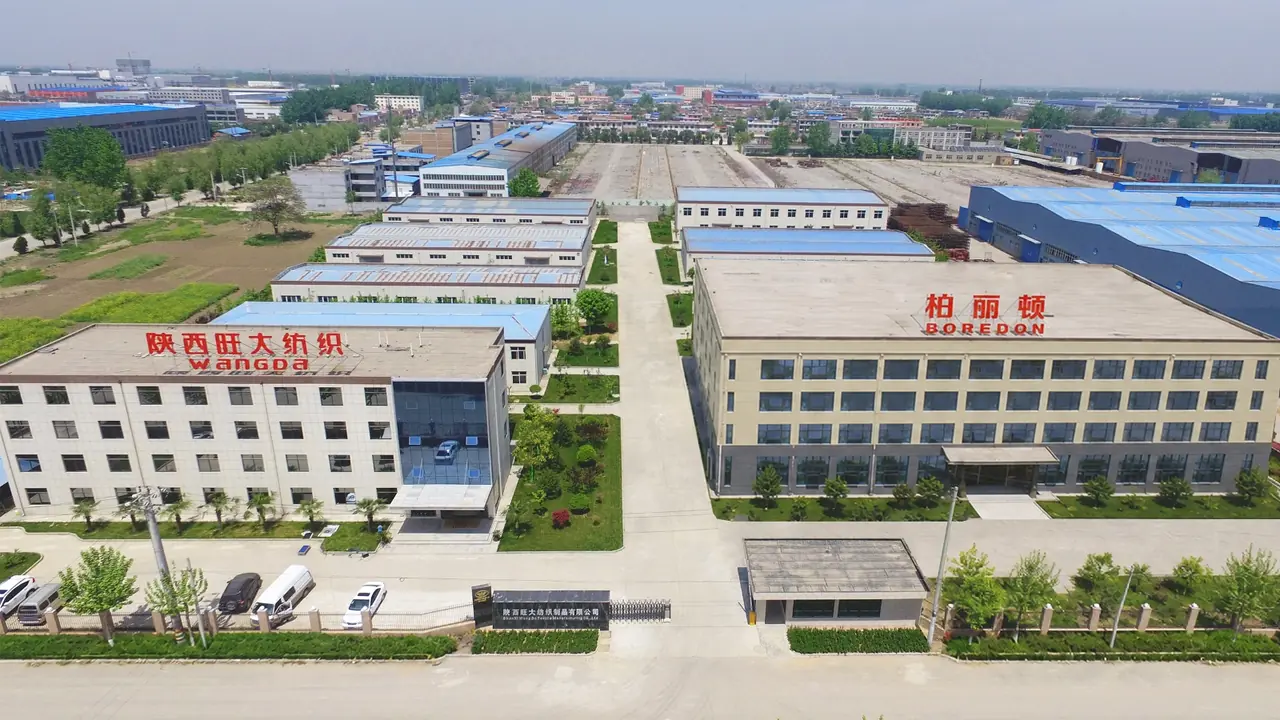
Nantong is a mature coastal textile cluster with dense access to mills, converters and logistics services. BOREDON’s Xi’an model competes differently: its manufacturing parent works on self-owned industrial land, in self-built workshops, with 250 in-group looms and connected conversion processes. This removes factory rent from the cost structure and can produce a more competitive like-for-like quotation, but material, specification, quantity, packing and route still determine the final landed cost.
Key takeaways
What a buyer should retain
- Compare a named factory, not only two city labels.
- Normalize the product specification and delivery basis before comparing cost.
- BOREDON's self-owned Xi'an site removes factory rent from its fixed-cost structure.
- Route, Incoterm, transit time and freight cost must be confirmed for each destination and shipment.
Decision framework
Questions this guide helps the buying team resolve
Start with an identical specification
Use the same composition, yarn and weave, GSM, finished size, construction, color, logo, tolerance, testing, packing and quantity for both quotations. A lower number for a different product is not a sourcing saving.
Separate factory cost from logistics cost
Ex-factory cost, domestic transport, international freight, duty and receiving cost should be compared separately. Xi’an may offer lower fixed production overhead while a coastal route may be shorter for a particular destination.
Price the repeat order as well as the first
Material continuity, approved samples, technical sheets, batch records and retained packing instructions affect the cost of replenishment. A cheap opening order becomes expensive if the replacement construction changes.
Location comparison framework
| Decision factor | BOREDON Xi'an evidence | What the buyer should compare elsewhere |
|---|---|---|
| Site tenure | Approx. 20,359 m² self-owned land | Owned, financed or leased; renewal and relocation exposure |
| Workshop base | Approx. 7,000 m² self-built workshops | Permanent process layout and relevant production area |
| Weaving | 250 in-group looms | Which fabric decisions are in-house or purchased |
| Downstream processes | Wadding, quilting, filling, sewing, inspection and packing | Named in-house and approved external steps |
| Logistics | Westbound rail and multimodal feasibility reviewed per inquiry | Incoterm, route, frequency, transit and landed cost |
Evidence: B1 · BOREDON · B2 · BOREDON
Cost comparison: hold these variables constant
| Product variables | Commercial variables | Continuity variables |
|---|---|---|
| Composition, yarn, weave and GSM | Quantity by item, size and color | Approved sample and released specification |
| Finished dimensions and tolerance | Packing, Incoterm and destination | Batch identification and inspection records |
| Construction, labels and branding | Testing and document requirements | Change approval and repeat-order reference |
Evidence: B3 · BOREDON · B5 · BOREDON
01
What Nantong’s textile cluster does well
Nantong has a mature home-textile and hospitality-linen supply base. A dense network of fabric suppliers, dyeing and finishing resources, sewing factories, packaging vendors and coastal freight services can shorten local sourcing distances and create many quotation options. For buyers who value access to a broad supplier cluster, that is a genuine advantage.
Cluster density does not tell a buyer who owns the factory, whether the quoted facility is rented, which processes are controlled by the named supplier, or whether the same mill will make the repeat order. Those facts need to be verified company by company rather than inferred from the city.
Supporting evidence: B1 · Manufacturing Base · B2 · Equipment & Reference Capacity
02
What BOREDON’s Xi’an cost structure changes
Wangda Textile manufactures on approximately 20,359 m² of self-owned industrial land in approximately 7,000 m² of self-built workshops. There is no factory-rent line or routine landlord-driven relocation risk in that operating structure. The group also operates 50 air-jet looms and 200 rapier looms, so core fabric production decisions begin within the manufacturing system.
Self-owned property does not make every item automatically cheaper. Cotton content, yarn quality, weave, dyeing, finishing, construction, order size and packaging can outweigh property cost on a particular product. It does, however, create a lower fixed-overhead base than a comparable rented facility carries, which is why BOREDON can compete strongly on specification-matched orders.
Supporting evidence: B1 · Manufacturing Base
03
Xi’an logistics: inland does not mean disconnected
Xi’an is a major inland transport hub and an origin point for China–Europe rail services. For Central Asia and parts of Europe, westbound rail and multimodal options can be reviewed alongside sea freight. For other destinations, goods can move to an eastern Chinese port for container shipment.
The correct route is an order decision. Destination, volume, target date, Incoterms, rail capacity and ocean freight conditions all matter. BOREDON confirms the route and commercial terms during quotation rather than presenting one corridor as universally fastest or cheapest.
Supporting evidence: B2 · Equipment & Reference Capacity
04
A five-line comparison buyers can actually use
Ask each supplier to identify the legal manufacturer, factory address, property and workshop status, main production equipment, and which processes are completed in-house. Then request one specification-matched sample, one itemized quotation and the packing dimensions needed to estimate freight.
Finally, ask how the supplier controls a repeat order. The answer should name documents: approved sample, released specification, order reference, batch identification and retained packing instruction. This comparison is more predictive than a city label or an unqualified factory-direct claim.
Supporting evidence: B3 · Published Product Specifications · B5 · Quality Control Process
Evidence and sources
References used in this guide
BOREDON figures are linked to the corresponding factory, product or testing page. External standards link to the issuing organization. Order-specific performance remains subject to the released specification, approved sample and applicable test method.
- B1Manufacturing BaseBOREDON
Confirmed land, workshop, equipment and corporate manufacturing facts.
- B2Equipment & Reference CapacityBOREDON
Published equipment counts and reference output, subject to specification and scheduling.
- B3Published Product SpecificationsBOREDON
Confirmed sizes, materials, MOQ and lead-time ranges from the C1 product database.
- B5Quality Control ProcessBOREDON
Specification release, in-process inspection, final inspection and packing controls.
Buyer FAQ
Questions buyers ask about this topic
Is Xi’an always cheaper than Nantong for hotel linen?
No. BOREDON has a structurally lower fixed-cost base because its group owns the land and workshops, but each comparison must use the same product specification, quantity, testing, packing and delivery basis.
Does Nantong still have a supply-chain advantage?
Yes. Nantong’s textile cluster offers high supplier density and coastal access. BOREDON’s countervailing advantages are owned assets, in-group weaving, connected production control and westbound route options from Xi’an.
How should buyers compare two hotel linen quotations?
Normalize material, yarn and weave, GSM, finished size, tolerance, construction, customization, testing, quantity, packing, Incoterms and freight. Then compare repeat-order controls and the verified manufacturer behind each quote.