Air-jet weaving for controlled fabric programs
50 RFJA20 air-jet looms provide approximate daily output of 8,000 meters. They support fabric programs where construction, width and repeatability are defined in the order specification.

Manufacturing evidence
Wangda Textile runs a confirmed 250-loom weaving base in Xi’an: 50 RFJA20 air-jet looms and 200 QFJ788 rapier looms. The same manufacturing system connects non-glue wadding, computerized quilting, multi-needle quilting, sewing, pillow filling and filling equipment for hospitality linen production.
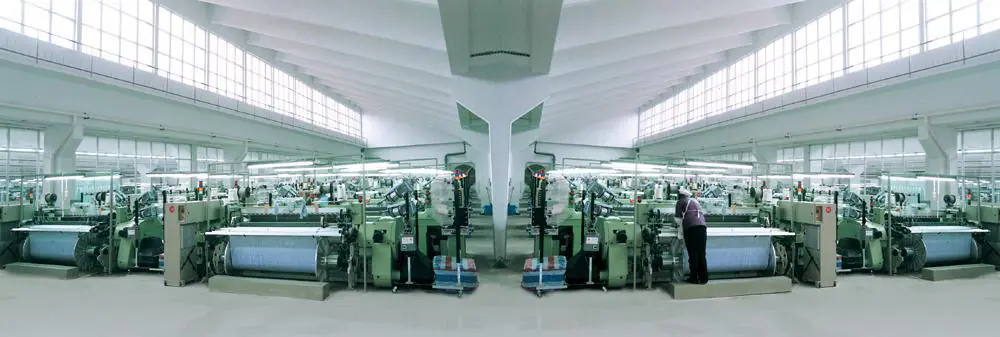
Production in view
Reference capacity is reviewed against the requested construction and current schedule.
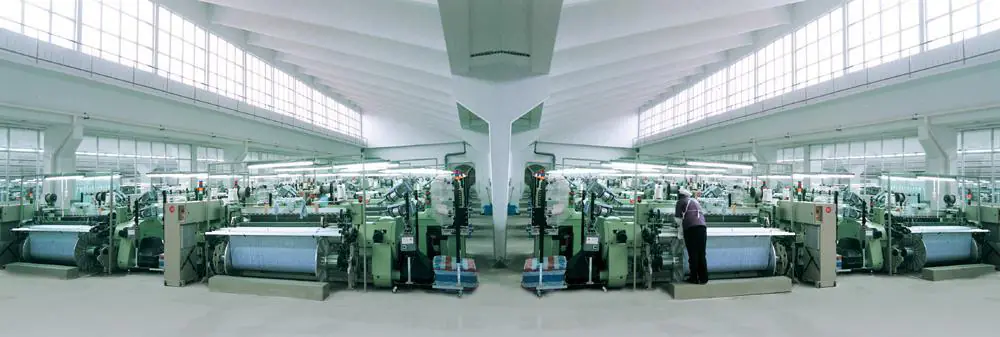
Air-jet and rapier looms support core fabric production within the group.
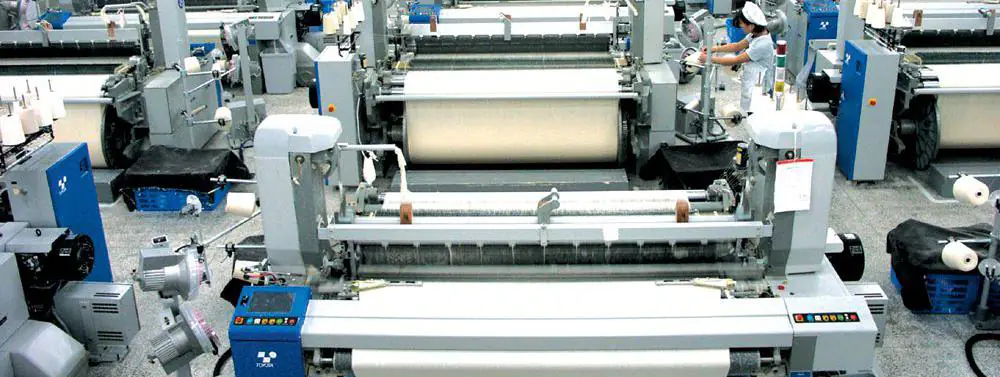
50 RFJA20 air-jet looms provide approximately 8,000 meters of reference daily output.
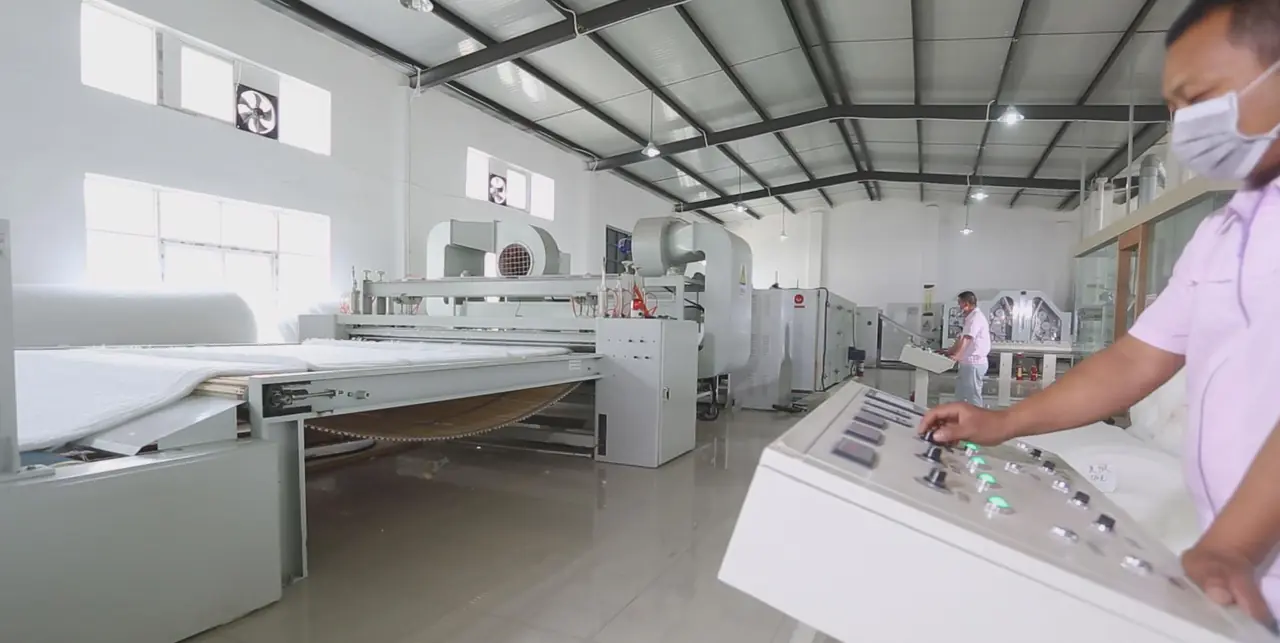
The production line supports controlled filling layers for suitable bedding inserts.
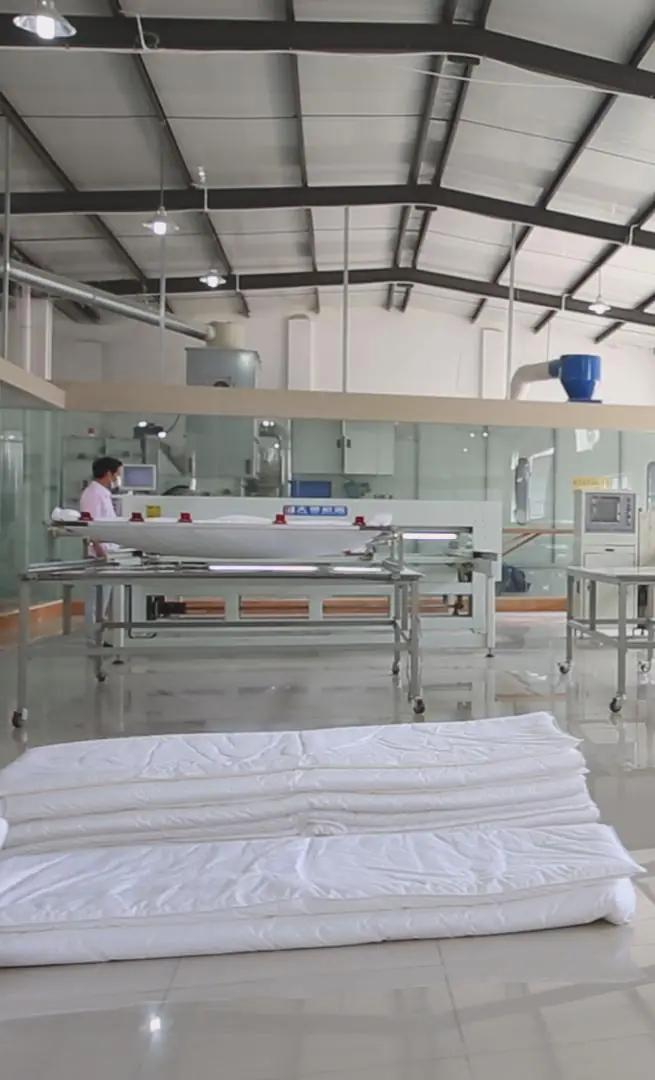
Quilting equipment connects filling materials with approved panel and stitch specifications.
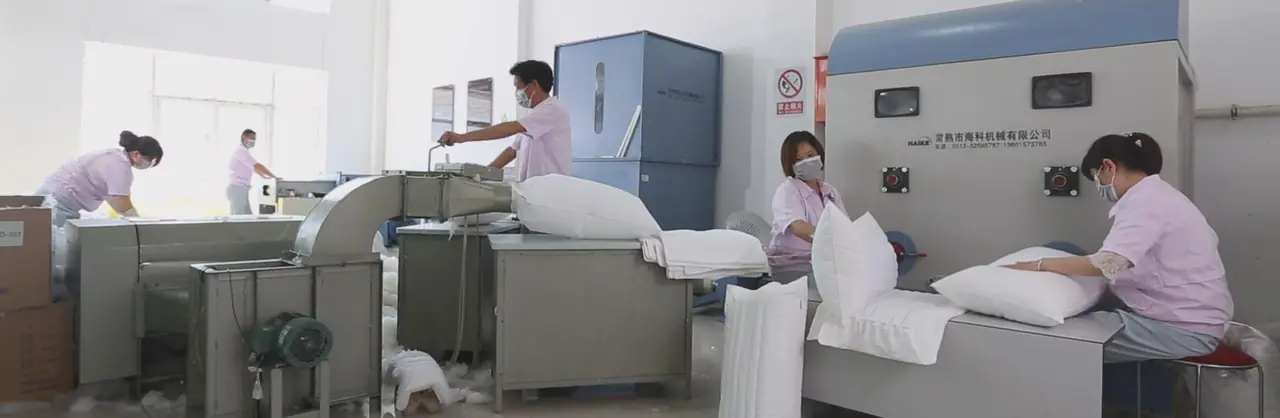
Quantitative filling equipment supports weight control for approved pillow constructions.
| Process | Equipment | Daily output |
|---|---|---|
| Air-jet weaving | 50 looms · RFJA20 air-jet looms | Approx. 8,000 meters/day |
| Rapier weaving | 200 looms · QFJ788 rapier looms | Approx. 6,000 meters/day |
| Non-glue wadding | 1 line · Non-glue wadding production line | Approx. 700 kg/day |
| Computerized quilting | 3 machines · Computerized quilting machines | Approx. 500 pieces/day |
| Multi-needle quilting | 2 machines · Computerized multi-needle quilting machines | Approx. 400 pieces/day |
| Sewing | 50 machines · High-speed lockstitch sewing machines | Approx. 5,000 pieces/day |
| Pillow filling | 3 machines · Quantitative pillow filling machines | Approx. 800 pieces/day |
| Filling | 1 machine · Filling machine | Approx. 1,000 pieces/day |
Reference capacity varies by product specification, construction, order mix, shift arrangement and current production schedule. Final lead time and capacity allocation are confirmed during technical review.
Buyer guidance
50 RFJA20 air-jet looms provide approximate daily output of 8,000 meters. They support fabric programs where construction, width and repeatability are defined in the order specification.
200 QFJ788 rapier looms provide approximate daily output of 6,000 meters. Together with the air-jet base, they bring the confirmed weaving total to 250 looms and approximately 14,000 meters of combined daily fabric output.
1 non-glue wadding production line provides approximately 700 kg/day. 3 computerized quilting machines provide approximately 500 pieces/day, while 2 computerized multi-needle quilting machines provide approximately 400 pieces/day.
50 high-speed lockstitch sewing machines provide approximately 5,000 pieces/day. Sewing capacity supports bed linen, selected bath and spa items, table linen and other approved hospitality constructions.
3 quantitative pillow filling machines provide approximately 800 pieces/day. 1 additional filling machine provides approximately 1,000 pieces/day for suitable constructions.
Equipment alone does not control an order. Material, construction, finished dimensions, approved samples, inspection points, packing instructions and production records connect machine capacity to the buyer’s specification.
Published output figures describe approximate production capability under reference conditions. Air-jet weaving is approximately 8,000 meters per day and rapier weaving approximately 6,000 meters per day; downstream outputs vary by process and item.
Actual allocation changes with fabric width, weave, construction, size mix, order quantity, color, machine setup, shift arrangement, current orders and maintenance. BOREDON confirms the achievable schedule only after reviewing the complete requirement.
Air-jet and rapier looms serve different fabric constructions and production economics. Quilting equipment controls pattern and layer stability. Filling equipment controls the measured fill introduced to bedding inserts, while sewing equipment converts cut components into the finished specification.
Ask which route your product will follow, which control points apply and which process is completed externally if any. A credible capacity discussion explains the production route rather than multiplying one headline daily figure by the number of days.
A project containing sheets, towels, inserts, bathrobes and table linen does not move through one identical production line. The longest material, customization or conversion step can set the shipment date even when another item is already complete.
Provide quantities by item, size and color, plus the target delivery date and whether split shipment is acceptable. The factory can then review material availability, equipment load, sample status and packing as one schedule.
Buyer FAQ
The confirmed reference is approximately 14,000 meters/day: approximately 8,000 meters from air-jet weaving and 6,000 meters from rapier weaving.
BOREDON reviews construction, quantities, process requirements, order mix, shifts and the current production schedule before confirming allocation and lead time.
Yes. Custom dimensions are reviewed against fabric width, construction, cutting, sewing or quilting requirements and sample approval.